
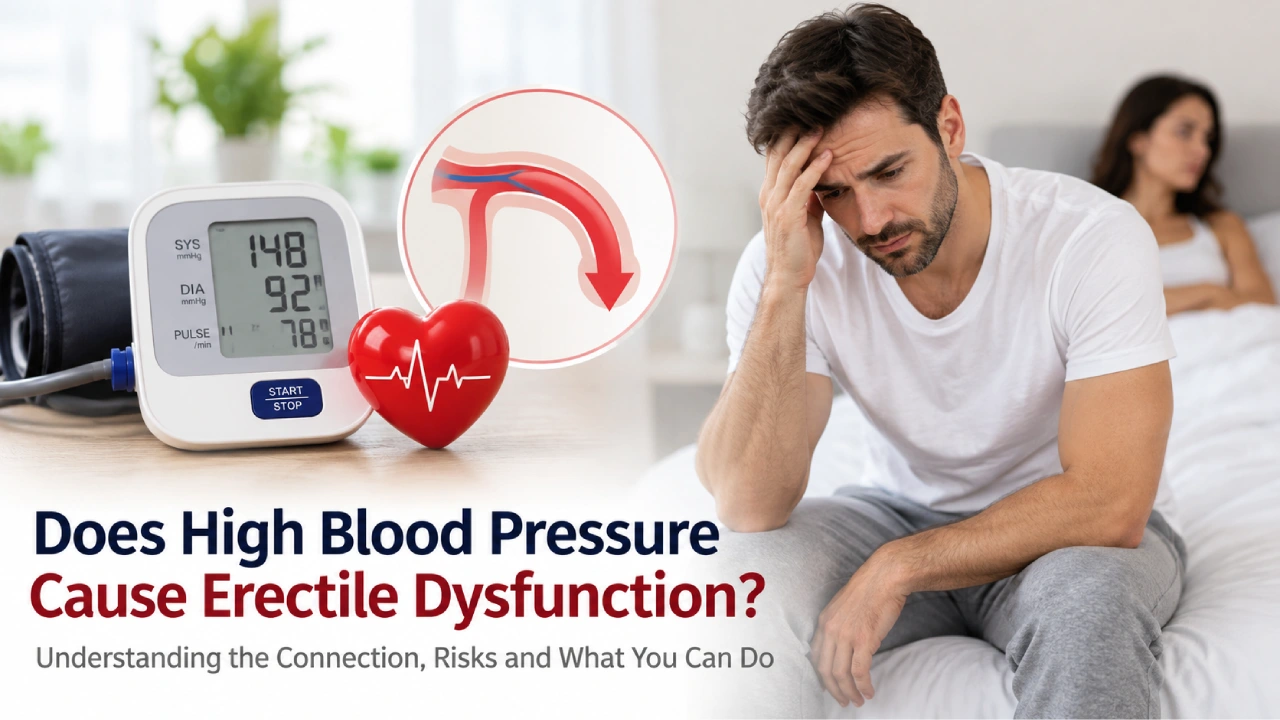
If you have high blood pressure and are also experiencing erectile dysfunction, you are not alone — and the connection between the two is not a coincidence. Hypertension is one of the most common physical causes of erectile dysfunction, and the relationship runs in two directions: high blood pressure damages the blood vessels that make erections possible, and many blood pressure medications make ED worse as a side effect.
Understanding this connection — and what you can do about it — is the focus of this guide. You will learn exactly how high blood pressure causes ED, which BP medications are the biggest culprits, and how to treat your ED safely without putting your cardiovascular health at risk.
The Direct Answer: Yes — High Blood Pressure Causes ED
High blood pressure damages the inner lining of blood vessels (endothelium) and reduces their ability to dilate. Since erections depend entirely on rapid, significant increases in blood flow, hypertension directly impairs the physical mechanism behind getting and maintaining an erection. Men with hypertension are twice as likely to develop erectile dysfunction as men with normal blood pressure.
- How High Blood Pressure Causes Erectile Dysfunction
- How Common Is BP-Related ED?
- Do Blood Pressure Medications Make ED Worse?
- Blood Pressure Medications and Their ED Impact
- Can You Treat ED Safely If You Have High Blood Pressure?
- Lifestyle Changes That Improve Both BP and ED
- What to Do Next: A Step-by-Step Plan
- Frequently Asked Questions
- Conclusion
How High Blood Pressure Causes Erectile Dysfunction
An erection is fundamentally a vascular event. It requires blood vessels in the penis to dilate rapidly, allowing a large volume of blood to flow in and fill the erectile tissue. This process depends on the endothelium — the thin inner lining of blood vessels — functioning correctly.
High blood pressure damages the endothelium over time in several interconnected ways:
High Blood Pressure
Sustained elevated pressure forces blood against vessel walls with excessive force
Endothelial Damage
The inner lining of blood vessels becomes inflamed, stiff and less responsive to nitric oxide
Reduced Blood Flow
Arteries narrow and stiffen — less blood reaches penile tissue during arousal
Erectile Dysfunction
Insufficient blood flow means erections become difficult or impossible to achieve and maintain
The Nitric Oxide Problem
Nitric oxide is the molecule that signals blood vessels to relax and dilate during sexual arousal. The endothelium produces it in response to arousal signals — but hypertension damages the endothelial cells responsible for this production. The result: less nitric oxide, less dilation, less blood flow, weaker or absent erections.
This is precisely why PDE5 inhibitors like sildenafil (Cenforce) and tadalafil (Vidalista) work — they enhance the effect of the nitric oxide that is produced, compensating for the reduced output caused by endothelial damage.
The Shared Mechanism: The same endothelial dysfunction that causes hypertension-related ED is the early stage of atherosclerosis — the arterial narrowing that leads to heart attacks and strokes. This is why ED in hypertensive men is also a cardiovascular warning signal worth taking seriously beyond the bedroom.
How Common Is BP-Related ED?
The connection is so well-established in clinical medicine that many cardiologists now routinely screen men with hypertension for ED — and vice versa. A man presenting with ED and known hypertension is at significantly elevated cardiovascular risk, and his care should reflect both conditions simultaneously.
Do Blood Pressure Medications Make ED Worse?
This is where the situation becomes more complicated — and more frustrating for many men. Several commonly prescribed blood pressure medications have erectile dysfunction listed as a recognised side effect. In some cases, the medication managing the hypertension may be contributing as much to the ED as the hypertension itself.
BP Medications More Likely to Cause ED
- Thiazide diuretics (bendroflumethiazide, indapamide)
- Beta-blockers (atenolol, metoprolol, propranolol)
- Older alpha-blockers at high doses
- Spironolactone (anti-androgen effects)
- Clonidine (centrally-acting drug)
BP Medications Less Likely to Cause ED
- ACE inhibitors (ramipril, lisinopril)
- ARBs — especially losartan (may actually improve ED)
- Calcium channel blockers (amlodipine)
- Nebivolol (vasodilating beta-blocker)
- Newer alpha-blockers at therapeutic doses
Losartan — A Special Case: Multiple clinical studies have shown that losartan, an ARB (angiotensin receptor blocker) used for hypertension, may actually improve erectile function in some men. If you are on a blood pressure medication that worsens your ED, asking your GP about switching to losartan may be worth exploring.
Blood Pressure Medications and Their ED Impact: Full Reference
Use this table to understand how your current blood pressure medication may be affecting your erectile function:
| Medication Type | Examples | ED Impact | Notes |
|---|---|---|---|
| Thiazide Diuretics | Bendroflumethiazide, indapamide | High Risk | One of the most common medication causes of ED. Reduces zinc and may lower testosterone. |
| Beta-Blockers (older) | Atenolol, metoprolol, propranolol | High Risk | Reduce heart rate and can impair arousal response. Atenolol is the most frequently linked to ED. |
| Beta-Blockers (newer) | Nebivolol, carvedilol | Low Risk | Nebivolol releases nitric oxide and may actually improve erectile function. |
| ACE Inhibitors | Ramipril, lisinopril, perindopril | Minimal Impact | Generally ED-neutral. Some studies suggest mild benefit to erectile function. |
| ARBs | Losartan, valsartan, candesartan | May Improve ED | Losartan in particular has shown ED improvement in multiple trials. A good first-line option for hypertensive men with ED. |
| Calcium Channel Blockers | Amlodipine, felodipine | Minimal Impact | Generally ED-neutral and sometimes slightly beneficial to penile blood flow. |
| Alpha-Blockers | Doxazosin, tamsulosin | Variable | Can lower BP significantly and cause dizziness. Interact with ED medications — must be managed carefully. |
| Spironolactone | Spironolactone | High Risk | Anti-androgen effects reduce testosterone. Significantly associated with reduced libido and ED. |
Never Stop Your BP Medication Without Talking to Your Doctor: If you suspect your blood pressure medication is causing ED, do not stop taking it. Uncontrolled hypertension is far more dangerous than ED. Instead, discuss alternatives with your GP — switching to an ACE inhibitor or ARB may resolve the issue while maintaining blood pressure control.
Can You Treat ED Safely If You Have High Blood Pressure?
For most men with hypertension, yes — ED medication is safe to use, provided a few important conditions are met. Here is what you need to know:
PDE5 Inhibitors and Blood Pressure
Sildenafil (Cenforce) and tadalafil (Vidalista) both cause a modest reduction in blood pressure as part of their mechanism — typically around 5–10 mmHg systolic. For most men with controlled hypertension, this is clinically insignificant. However, the effect requires careful management in certain situations.
ED Medication Is Safe If You Have...
- Controlled hypertension (BP under 160/100)
- No nitrate medications prescribed
- Stable cardiovascular health
- No recent cardiac events (6+ months)
- Controlled diabetes if applicable
- Normal liver and kidney function
Discuss with GP First If You Have...
- Uncontrolled hypertension (above 170/100)
- Alpha-blockers in your medication list
- Multiple blood pressure medications
- Recent angina or cardiac events
- Nitrate medications of any kind
- Significant kidney or liver impairment
The Nitrate Rule — Absolute
If you take nitrate-based medications — GTN spray, isosorbide mononitrate, or any other nitrate — you must never take sildenafil, tadalafil, or any PDE5 inhibitor. The combined effect on blood pressure can be severe and potentially fatal. This rule has no exceptions. If you take nitrates and want to treat ED, discuss alternative options with your cardiologist.
Starting Dose Recommendations for Hypertensive Men
For men with high blood pressure starting ED medication, the recommended approach is conservative:
Sildenafil: Start at 25–50mg (Cenforce 50mg is ideal). Take your first dose at home, sitting down, not after exertion. Rise slowly from seated positions for several hours after dosing. | Tadalafil: Start at 10–20mg. The longer half-life means any blood pressure effect persists longer — low-dose daily tadalafil (5mg) may actually be better tolerated than on-demand higher doses in some hypertensive men.
Lifestyle Changes That Improve Both Blood Pressure and ED
The most powerful intervention available to men with both hypertension and ED is lifestyle change — because the same changes that lower blood pressure also directly restore erectile function. These are not separate agendas.
Regular Aerobic Exercise
30 minutes of moderate-intensity exercise (brisk walking, cycling, swimming) five days per week reduces systolic blood pressure by 5–8 mmHg and directly improves erectile function through better vascular health and nitric oxide production.
Reduce Salt Intake
Cutting sodium to under 6g per day reduces systolic BP by 2–8 mmHg in most people. Processed foods are the biggest source — cooking from scratch dramatically reduces hidden salt intake.
Lose Excess Weight
Even modest weight loss — 5% of body weight — produces meaningful reductions in blood pressure and significant improvements in erectile function. Abdominal fat in particular suppresses testosterone and impairs blood vessel health.
Stop Smoking
Smoking damages endothelial cells, accelerates arterial stiffness, and directly worsens both hypertension and ED. Quitting produces measurable improvements in vascular health and erectile function within months.
Limit Alcohol
Excess alcohol raises blood pressure and impairs sexual function. Staying within UK guidelines — 14 units per week maximum, with alcohol-free days — produces meaningful reductions in BP and better erectile responses.
DASH or Mediterranean Diet
Both diets reduce hypertension and cardiovascular risk through similar mechanisms — high in vegetables, fruits, whole grains, and healthy fats, low in processed food and saturated fat. The Mediterranean diet specifically has strong evidence for improving erectile function.
What to Do Next: A Step-by-Step Plan
If you have high blood pressure and are experiencing erectile dysfunction, here is a practical, prioritised action plan:
Get Your Blood Pressure Under Control First
Treating ED while blood pressure remains uncontrolled is both less effective and more risky. Prioritise BP management — whether through medication optimisation, lifestyle changes, or both. A target of below 140/90 mmHg significantly reduces the vascular damage driving your ED.
Review Your BP Medication With Your GP
Tell your GP you are experiencing erectile dysfunction. Ask whether your current medication is likely contributing and whether switching to an ACE inhibitor, ARB (particularly losartan), or calcium channel blocker might maintain BP control with less ED impact. Do not stop any medication without medical guidance.
Start Lifestyle Changes Immediately
Exercise, dietary improvements, weight loss, quitting smoking, and reducing alcohol all simultaneously lower blood pressure and improve erectile function. These do not require a prescription and can produce meaningful results within 4 to 8 weeks of consistent effort.
Consider ED Medication — Carefully and at the Right Dose
Once your blood pressure is controlled and you have confirmed you are not on nitrates, ED medication is safe for most hypertensive men. Start at Cenforce 50mg or Vidalista 20mg — not the highest dose. Take your first dose at home, seated, and monitor how you feel. Avoid alcohol on dosing day.
Monitor and Adjust Over Time
As your blood pressure improves through lifestyle changes or medication optimisation, your ED may also improve independently. Stay in regular contact with your GP, monitor your response to ED medication, and adjust doses as needed. What works at one stage of BP management may need refinement as your cardiovascular health improves.
Treat Your ED Safely in the UK
Cenforce 50mg is the recommended starting dose for men with high blood pressure. Genuine products, discreet UK delivery.
Frequently Asked Questions
Conclusion: Two Problems, One Solution
High blood pressure and erectile dysfunction are not coincidentally connected — they share the same biological root cause, and improving one almost always helps the other. The endothelial damage that drives hypertension is the same damage that impairs the blood flow that erections depend on.
The practical implication is encouraging: the lifestyle changes that lower blood pressure also restore erectile function. Exercise, dietary improvement, weight loss, and quitting smoking work on both problems simultaneously. For many men, these changes — combined with a switch to an ED-friendly blood pressure medication like losartan — produce meaningful improvement without needing ED medication at all.
When ED medication is needed, it is safe for most men with controlled hypertension when taken at the right dose, without alcohol, and crucially — never alongside nitrates. Cenforce 50mg is the recommended starting point, and Vidalista is an excellent alternative for those who prefer the 36-hour window.
Shop safe ED treatment: Cenforce 50mg → | Cenforce 100mg → | Vidalista →
Related Articles
Can Erectile Dysfunction Be an Early Sign of Heart Disease?
Over 60sBest ED Pill for Men Over 60: A Complete UK Guide
DosageCenforce 50mg vs 100mg: Which Dose Is Right for You?
| Written By |
Olivia Bennett (Content Writer)
6+ years of experience in men’s health and pharmaceutical content. |
|---|---|
| Medically Reviewed By |
Dr. Nick Linton 12+ years of clinical experience in men’s health and sexual medicine. |
| Last Reviewed | 18/09/2026 |
| Next Review | January 26, 2027 |
| Category | Cenforce |
Written and reviewed by

Olivia Bennett
Health Content Writer & Medical Research Contributor